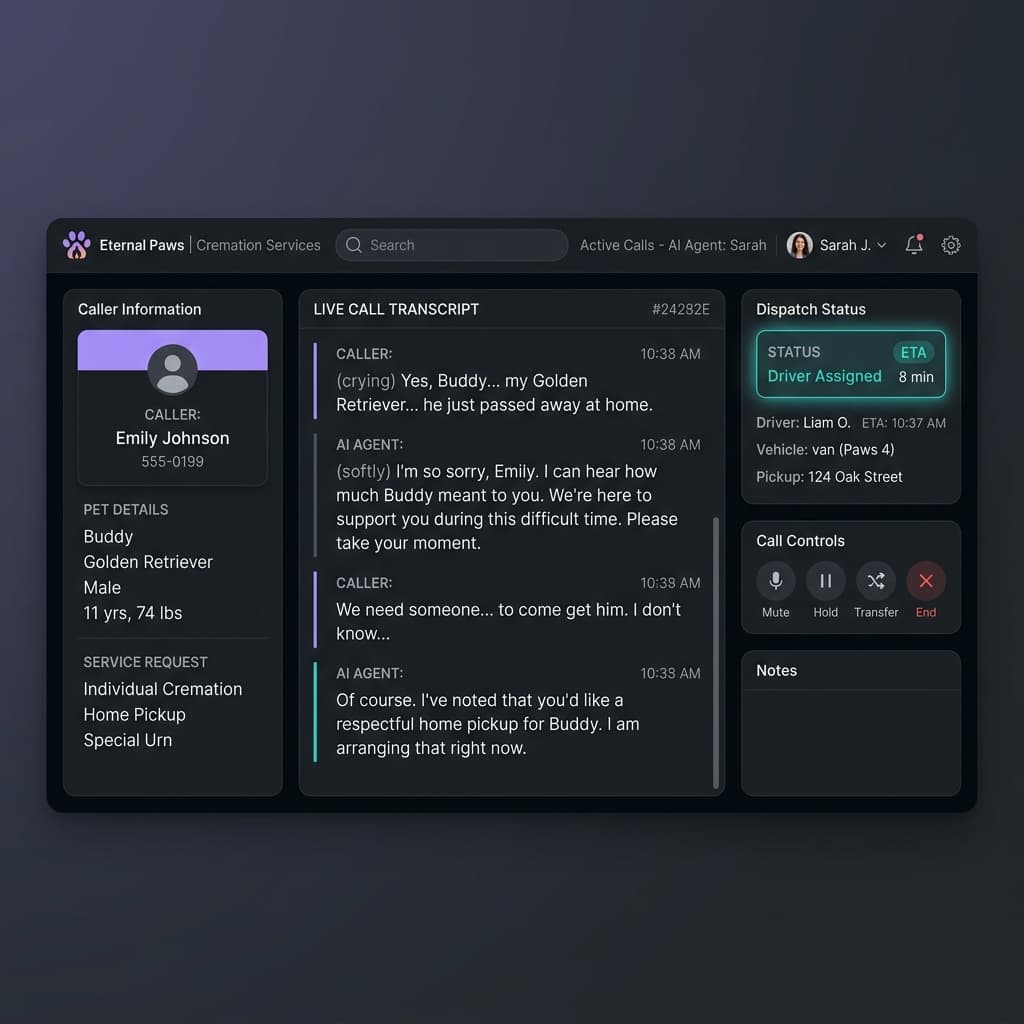
Standard GPS apps fail in pet aftercare because they prioritize pure mileage over emotional urgency. Compassionate routing software uses AI to prioritize emergency clinic pickups, manage vehicle capacity, and ensure chain-of-custody tracking.
Why Standard Routing Fails in Pet Aftercare
Standard delivery routing software treats a pet pickup the same as a package delivery. In reality, a family waiting at an emergency clinic with a deceased pet is an emotionally volatile situation that requires immediate priority over a scheduled residential pickup.
You have three pickups queued: a Golden Retriever in north Austin, a cat in Round Rock, and an emergency request from a veterinary clinic on the south side. Your driver is currently in Cedar Park. If you use standard GPS apps, there's no logic identifying which pickup must come first.
This is the daily reality for operators without purpose-built routing software. Making an emergency clinic family wait because your driver hit visitors on a suboptimal route is a fundamental failure of the promise you make to treat their companion with dignity.
What Compassionate Routing Actually Means
Standard field service routing treats every job as interchangeable, causing operators to accidentally dispatch the wrong vehicle type or mistakenly combine individual and communal cremations.
In pet aftercare, jobs are distinctly not interchangeable. If you dispatch a smaller sedan to a large animal transport, the driver will have to apologize and leave. If you fail to separate individual and communal requests, you jeopardize your entire chain of custody.
- -Emergency clinic pickups automatically outrank scheduled residential pickups.
- -At-home euthanasia support requires the driver to arrive before the veterinarian.
- -Large animal transport selectively dispatches only vehicles configured for heavy capacity.
- -Communal vs. private cremation loads are segregated in the software and the vehicle.
The Dignity Protocol: A route might look optimal on a map, but if it requires keeping a deceased pet in a transport vehicle for over 4 hours before reaching cold storage, it violates basic dignity protocols. The software prevents these overly long routes.
Chain of Custody: The Operational Backbone
Maintaining perfect transparency requires physical logging of every transition step, but drivers frequently forget to log times when they are relying on clipboards and carbon-copy sheets.
When a grieving family inevitably asks, "How do I know this is really my pet in this urn?", a paper trail full of missing timestamps offers zero reassurance. A single unlogged transition creates permanent doubt.
- The driver scans the pet's unique ID tag at the home pickup.
- The software logs the timestamp, GPS location, and staff ID.
- The pet is assigned a specific compartment in the transport vehicle via the app.
- At the crematory, the intake staff scans the tag to confirm arrival.
- The cremation chamber ID is logged against the pet's digital record.
Preserving Credibility at Scale
As your pet aftercare business grows, you can no longer rely on memory and sticky notes to ensure ethical handling. You need a systemic safety net.
"We thought software was just for saving gas money. What it really did was save our reputation. We now have an impenetrable, digital chain of custody for every single animal we transport."
Priority Tiers in Compassionate Routing
Not all pickups carry the same emotional or operational urgency. The routing engine assigns every incoming request a priority tier that determines its position in the driver's queue. Understanding these tiers is essential for any operator managing more than five daily removals.
| Priority Tier | Example Scenario | Max Acceptable Wait | Routing Override |
|---|---|---|---|
| P0 — Critical | Family present at emergency vet clinic | 30 minutes | Overrides all scheduled stops |
| P1 — Urgent | At-home passing, family is waiting | 90 minutes | Inserted before next residential |
| P2 — Scheduled | Veterinary clinic daily sweep | Pre-arranged window | Standard route optimization |
| P3 — Deferred | Cold storage transfer between facilities | End of shift | Lowest routing priority |
The distinction between P0 and P1 is profound. A family sitting in a sterile veterinary exam room with their deceased dog on the table is in acute emotional crisis. The routing engine must treat this with the same urgency as a medical emergency, overriding the driver's current manifest to dispatch them directly to the clinic. A P2 scheduled sweep, by contrast, has an agreed-upon window and can tolerate minor delays without damaging the relationship.
This tiered architecture prevents the single most common failure in manual dispatching: treating all jobs as equal. When a human dispatcher looks at a whiteboard with six pending pickups, they lack the computational ability to weigh emotional urgency against geographic efficiency. The algorithm does this instantly, ensuring that compassion is never sacrificed for convenience.
Cold-Chain Time Limits and Dignity Protocols
The AVMA (American Veterinary Medical Association) recommends that deceased animals be transferred to appropriate cold storage within a reasonable timeframe to preserve the integrity of the remains. In practice, this means the routing software must enforce hard limits on how long a pet can remain in the transport vehicle before reaching the crematory's refrigeration unit.
- Maximum Transit Duration: Configure the system to reject any route that would keep remains in transit for longer than 4 hours during summer months or 6 hours during winter.
- Temperature Monitoring: Equip transport vehicles with IoT temperature sensors that feed real-time data back to the dispatch dashboard, alerting dispatchers if the cabin temperature exceeds safe thresholds.
- Route Pruning: If the algorithm detects that adding a new residential pickup to the current route would push the oldest pickup past its cold-chain limit, it automatically assigns the new job to a different vehicle.
- Family Notification: When remains arrive at the facility within the cold-chain window, an automated SMS is sent to the family confirming safe arrival, reinforcing trust.
- Compliance Logging: Every cold-chain data point is logged to the digital ledger, providing auditable proof that the facility adhered to best practices in the event of a regulatory inquiry or client dispute.
These protocols ensure that the routing engine never optimizes purely for fuel efficiency at the expense of the pet's dignified treatment. The software enforces a hard ceiling on transit duration that no human dispatcher could consistently maintain across a fleet of multiple vehicles operating simultaneously.
Driver-Family Interaction Protocols During Pickup
Compassionate routing extends beyond the algorithm. The driver who arrives at the family's home represents the crematory's brand during the most vulnerable moment of the customer relationship. The dispatch software supports this human interaction by providing the driver with contextual briefing notes before each stop.
When the routing engine assigns a residential pickup, it pushes a briefing card to the driver's mobile app containing the pet's name, species, approximate weight, and any special instructions the family mentioned during the intake call. This briefing prevents the two most common complaints families report about pickup services: the driver asking questions the family already answered on the phone, and the driver referring to the pet as "the body" or "the remains" instead of using the pet's name.
The software also tracks the driver's arrival time and sends the family a notification when the driver is five minutes away. This notification gives the family a final moment to say goodbye privately before the doorbell rings. Drivers are trained to wait at least thirty seconds after ringing the bell before knocking, giving the family time to compose themselves. These micro-interactions seem small individually, but together they create the perception of a deeply respectful, well-coordinated service that families remember and recommend.
After each pickup, the driver logs a brief sentiment note in the app describing the family's emotional state. This note is forwarded to the facility staff who will later return the urn, allowing them to calibrate their communication tone for the follow-up interaction. A family that was calm and composed at pickup requires a different approach than a family that was visibly devastated.
The Psychology of Arrival Time Predictability
In the immediate aftermath of an at-home pet euthanasia or sudden passing, the waiting period for the removal vehicle is often the most agonizing segment of the entire grieving process. The family is trapped in an emotional limbo; they cannot begin to process their grief, nor can they return to any sense of normalcy, while their deceased pet remains in the living room. If a dispatcher simply states, "We will have someone there within a few hours," this ambiguity creates excruciating psychological distress for the family.
Traditional routing fails in this scenario because it cannot provide accurate ETAs. A driver handling a residential pickup might encounter unexpected emotional delays—a family requiring an extra twenty minutes to say goodbye—which instantly invalidates the schedule for the rest of the route.
Advanced dispatch platforms specifically designed for compassionate aftercare utilize emotional telemetry to manage this unpredictability. The system provides the family with a secure digital tracker link, similar to a high-end black-car service, but stripped of any crass commercial branding. The family can see the driver's exact location on a map, providing them with a profound sense of control over the timeline.
More importantly, the software algorithm accounts for "grief buffering." When calculating the ETA for the next stop, the software does not simply calculate the drive time. It automatically adds a predefined emotional buffer—typically fifteen to twenty-five minutes—to the expected duration of the current residential stop. This ensures that the ETA provided to the next waiting family is highly conservative and accurate. When the driver arrives exactly on time, or slightly early, it establishes immediate trust and prevents the agonizing anxiety associated with a delayed, unpredictable arrival.
Residential Segregation and Vehicle Neutrality
The logistics of residential pet removal require a level of absolute discretion that standard freight or field service routing completely ignores. A family saying their final goodbyes on their front lawn does not want a brightly colored, aggressively branded box truck pulling into their driveway, broadcasting their tragedy to the entire neighborhood. Furthermore, they absolutely do not want to see other deceased pets when the cargo doors are opened.
Advanced routing systems manage these sensitivities through rigid operational constraints enforced by the software. First, the software ensures "Residential Segregation." The algorithm will never route a driver to a residential home pickup if the vehicle is currently loaded with communal returns from a high-volume veterinary clinic sweep. The software mandates that a vehicle must have a completely empty, pristine cargo area, or at minimum, a segregated, completely concealed compartment, before executing a residential stop.
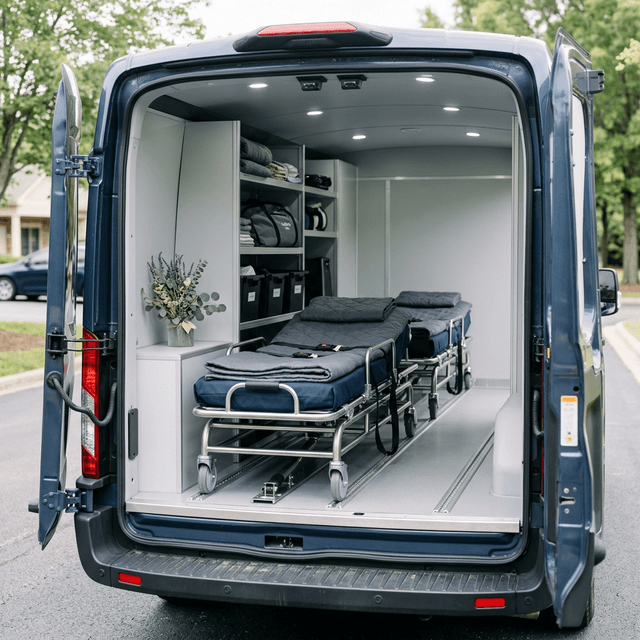
Second, the system enforces "Vehicle Neutrality." When the AI dispatch agent assigns the route, it cross-references the vehicle profile. For residential zones, the software specifically selects unmarked, unassuming vehicles—often dark-colored minivans or SUVs—rather than large commercial vans.
The software also guides the driver's arrival protocol via the mobile app. The app instructs the driver to park on the street rather than pulling directly into the driveway, ensuring the family maintains privacy. It also mandates that the driver utilize a specialized, rigid-frame carrying basket (often disguised as a soft-sided pet carrier or covered with a specialized velvet drape) rather than a clinical body bag for the transfer from the home to the vehicle. By enforcing these empathetic logistical protocols at the software level, the operator guarantees a dignified, white-glove experience that deeply comforts the family and solidifies the crematory's premium brand reputation.
The integration of the routing logic with local municipal zoning laws also prevents unforeseen operational disruptions. Certain affluent residential neighborhoods enforce strict commercial vehicle restrictions. The software algorithm automatically cross-references these municipal databases, guaranteeing that only compliant, unmarked vehicles are dispatched into these restricted zones, preventing costly traffic citations and protecting the discreet nature of the removal service.
The emphasis on vehicle neutrality also dictates the operational protocols for vehicle maintenance. Sophisticated dispatch algorithms track the exterior cleanliness of the fleet via driver-submitted digital photo verifications. If a vehicle has driven through a severe rainstorm, the software forces the driver to execute a mandatory car wash stop before proceeding to the next residential pickup, guaranteeing an immaculate visual presentation at all times.
The emphasis on vehicle neutrality also dictates the specific interior design of the removal vehicles. Advanced operators eschew standard industrial shelving in favor of custom-built, sound-dampened cabinetry. When the driver opens the rear doors in a quiet residential neighborhood at 2:00 AM, the neighbors do not hear the jarring clatter of metal stretchers or the sterile hum of an industrial refrigeration unit. The operation is entirely silent and visually obscured, respecting the solemnity of the event and ensuring the operator never generates noise complaints from local homeowners associations.
Keep reading: