Trusting a generic, outsourced answering service with the highly emotional task of managing a family's pet loss at 3:00 AM is a critical mistake. Human operators reading from rigid scripts frequently sound cold and robotic, alienating grieving families and causing them to abandon the call. DispatchNode replaces apathetic call centers with highly sophisticated AI voice agents that deliver perfect empathy, capture precise logistical data, and automatically route the removal team.
The Failure of Human Call Centers
The death care industry requires a level of emotional intelligence and tact that minimum-wage call center employees simply cannot provide. DispatchNode deploys AI voice agents that are explicitly trained on grief counseling frameworks, ensuring that every caller receives a consistent, deeply compassionate response that immediately establishes trust, regardless of when the call occurs.
A human answering a phone at an outsourced call center is simultaneously managing calls for plumbers, pizza delivery, and electricians. When they receive a call from a sobbing pet owner, they are contextually unprepared. They rush through a sterile script, asking blunt logistical questions like "What is the weight of the animal?" before offering any condolences. This lack of empathy is devastating to the caller.
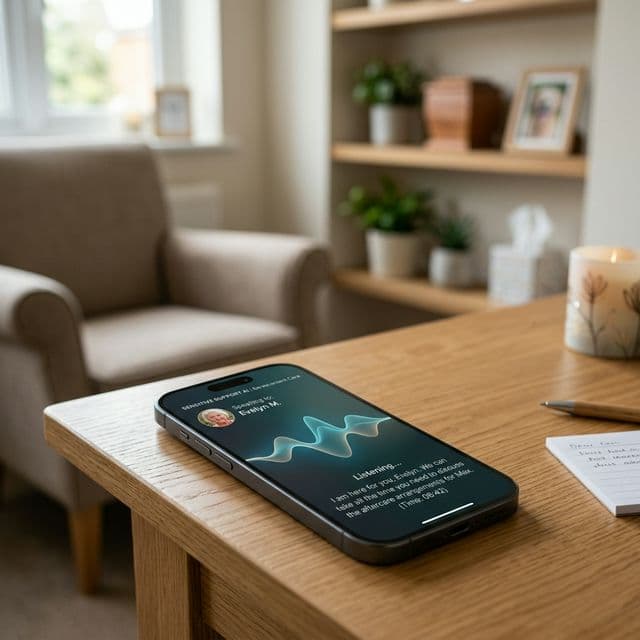
The AI voice agent never breaks character. It is programmed to identify emotional distress in the caller's tone and respond with appropriate pacing and profound empathy. It always begins the interaction by validating the loss: "I am so deeply sorry for your loss. Please take your time, we are here to support you." This consistent, high-level emotional intelligence is impossible to guarantee across a staff of human operators.
Furthermore, human operators frequently transcribe data incorrectly. Writing down a complex address or misspelling the pet's name leads to massive logistical headaches the next morning. The AI utilizes advanced natural language processing to perfectly transcribe every detail of the conversation, validating the address against municipal databases in real-time to ensure absolute accuracy for the dispatch team.
Handling Complex Service Inquiries
Families making after-hours calls frequently have complex questions regarding the difference between communal and private cremation, or they wish to inquire about specialized memorial products. DispatchNode empowers the AI agent to answer highly specific operational questions accurately, providing the family with complete information without requiring them to wait for a manager to call back the next day.
A generic answering service cannot explain the rigorous tracking protocols used during a private cremation. If a family asks, "How do I know I am getting only my dog's ashes back?", the human operator must admit ignorance and defer the question. This breaks trust and introduces doubt during the exact moment the family is deciding whether to hire the facility.
The AI agent possesses the entire knowledge base of the crematory's operations. It confidently and compassionately explains the chain-of-custody tracking system, assuring the family that their pet is treated with the utmost respect and that identity tracking is documented. It can explain pricing structures, urn options, and turnaround times smoothly.
This capability completely eliminates the need for "call-backs." The family receives all the information they require to make an informed, confident decision during the initial after-hours phone call. The AI can then proceed to secure the booking, entirely closing the sale while the human management team is asleep.
The Scalability of AI Empathy
During severe weather events or sudden spikes in volume, human call centers place callers on hold, forcing grieving families to listen to elevator music while waiting for assistance. DispatchNode provides an infinitely scalable AI architecture that handles an unlimited number of concurrent calls simultaneously, ensuring that zero families are ever placed on hold during a crisis.
The emotional damage caused by placing a distressed, grieving individual on hold is incalculable. They will almost always hang up and call the next crematory on the Google search list. Traditional call centers cannot avoid hold times because they have a finite number of human operators available during the night shift.
The AI completely solves this physical limitation. If ten different families call the crematory at the exact same moment on a Sunday night, the system instantaneously spins up ten independent AI agents. Every single caller receives an immediate answer and the undivided, empathetic attention of the system.
This absolute scalability ensures that the crematory captures every single available revenue opportunity in their market. They never lose a client to a busy signal or a hold queue, maximizing their top-line revenue while simultaneously providing a vastly superior, highly compassionate experience for the local community.
Smooth Integration with Dispatch
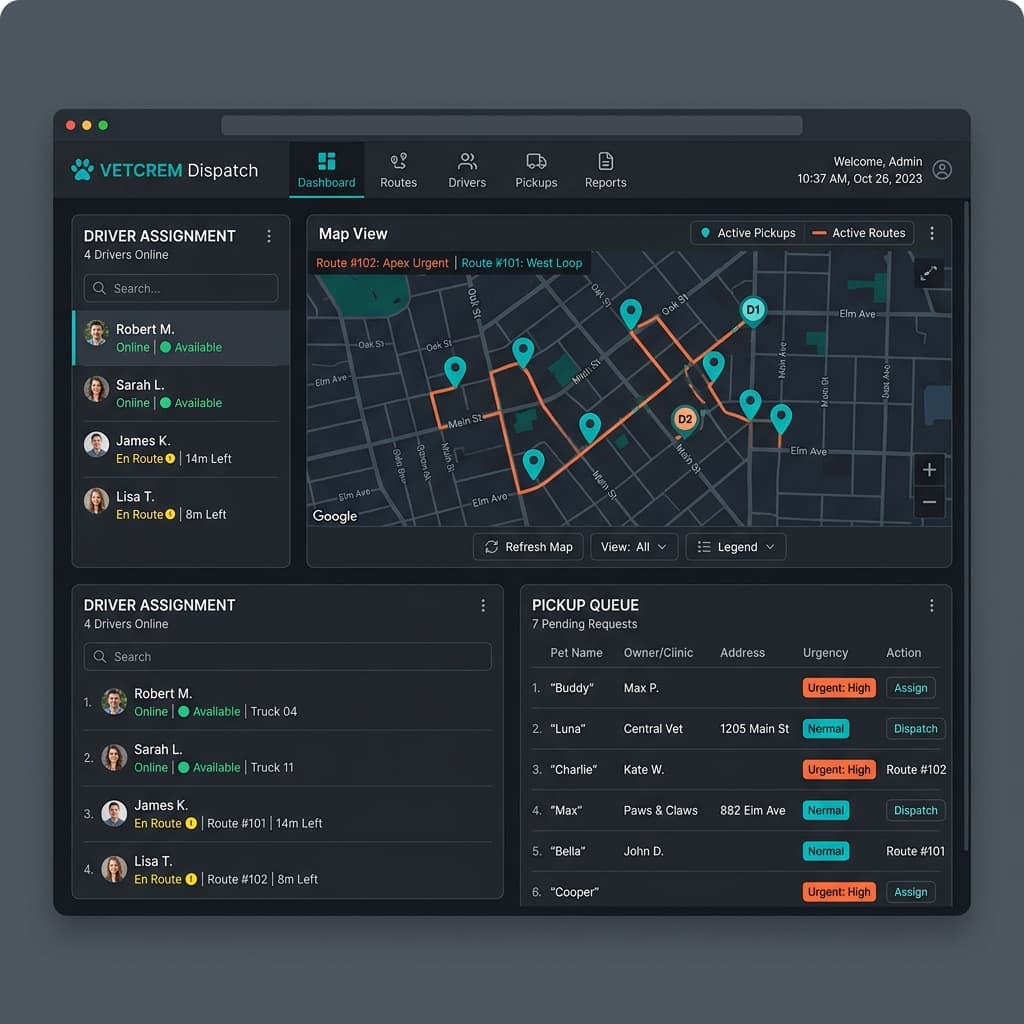
The ultimate value of the AI voice agent is not just answering the phone; it is executing the necessary logistics immediately after the call concludes. DispatchNode instantly converts the AI conversation data into a structured work order, automatically identifying the nearest on-call transport vehicle via GPS and injecting the route directly into the driver's mobile app without any manual data entry.
When a human answering service takes a message, that message must be manually translated into action. The dispatcher must read the email, type the address into a routing software, call the driver, and read them the details. This fragmented workflow introduces massive delays, forcing the family to wait hours for the removal team to arrive.
The AI platform acts as a fully autonomous logistics hub. Because the AI validated the address during the call, the routing engine takes over instantly. It pings the on-call driver's tablet, overriding their silent mode with a high-priority dispatch alert. The driver receives perfect turn-by-turn navigation and the specific details of the removal before the family has even hung up the phone.
By combining reliable emotional intelligence with instant, algorithmic routing, AI voice agents transform the after-hours operations of a pet crematory. They reduce administrative overhead, eliminate dispatch errors, and provide grieving families with an unparalleled level of rapid, highly compassionate service, cementing the facility's reputation as the premier provider in the region.
Cost Reduction and ROI Analysis
Operating an in-house dispatch center 24/7 or relying on high-tier human answering services represents a massive, often unscalable financial burden for independent crematories. By replacing these legacy systems with an AI voice agent, the operational expenditures shift dramatically in favor of the business.
| Expense Category | Traditional 24/7 Staffing | DispatchNode AI Voice Agent | Financial Impact |
|---|---|---|---|
| Night Shift Labor | $40,000+ per year | $0 (Included in SaaS) | Immediate Opex Reduction |
| Call Center Fees | $1.00 - $2.50 per minute | Flat Rate | Eliminates unpredictable spikes |
| Data Entry Errors | High (Cost of lost routing time) | Zero | Drastic fuel & time savings |
| Missed Call Revenue Loss | Very High | Zero | 100% Lead Capture |
The financial data proves that AI is not just an operational convenience; it is a critical driver of profitability. A single missed call at 2:00 AM can cost a facility over $500 in lost revenue. For a deeper dive into the economics of after-hours support, explore our analysis on 24/7 Availability in the Pet Aftercare Industry.
The AI Voice Dispatch Sequence
To truly grasp the efficiency of the AI agent, it is essential to visualize the flow of data from the initial spoken word to the physical arrival of the removal technician.
This sequence entirely eliminates the "middleman," directly connecting the grieving family's needs to the logistical execution of the fleet.
Deploying the AI Agent in Your Facility
Integrating an AI voice agent into your existing telephony infrastructure is surprisingly simple. Facilities looking to modernize their after-hours response should follow this deployment path:
- Map Your Telephony Setup: Determine if you will port your existing number or forward your main line to the AI agent at exactly 5:00 PM.
- Train the Persona: Customize the AI's greeting, pricing knowledge, and specific empathy scripts to match your brand's unique voice.
- Configure Routing Zones: Establish the precise geographic boundaries that your night-shift drivers operate within so the AI can quote accurate ETAs.
- Connect the Payment Gateway: Integrate Stripe so the AI can automatically text deposit links to secure the booking before the truck rolls.
- Monitor and Audit: Review the AI call transcripts daily to ensure compliance with the compassionate care standards outlined by the IAOPCC (International Association of Pet Cemeteries & Crematories).
This structured approach guarantees a reliable rollout, permanently solving the crisis of after-hours communication.
Linguistic Normalization in Grief Intake
One of the most complex challenges in automated pet aftercare dispatch is parsing the highly variable, often euphemistic language used by grieving pet owners. When a pet passes away, the owner rarely uses clinical terminology. A human dispatcher instinctively understands that "my dog crossed the rainbow bridge," "he went to sleep," and "she passed on" all equate to the clinical status of "deceased."
However, a generic voice recognition system requires exact keyword matching. If the system is programmed to listen for the word "died" and the caller says "my cat just slipped away," the generic system fails to categorize the call correctly, leading to massive user frustration.
Advanced, domain-specific AI voice agents utilize a process called "Linguistic Normalization." The underlying Large Language Model (LLM) is trained on vast datasets of grief counseling and end-of-life care transcripts. The AI understands the semantic intent behind hundreds of different euphemisms and regional colloquialisms related to death.
When the caller uses a euphemism, the AI instantly normalizes the intent to the required database field (e.g., Status: Deceased) without ever breaking the conversational illusion or forcing the caller to clarify their language. Furthermore, the AI mirrors the caller's chosen terminology. If the caller says, "My baby went to heaven," the AI will not respond with a sterile, "I understand your pet is deceased." It will respond with, "I am so deeply sorry to hear that your baby has passed." This linguistic mirroring is a powerful psychological technique that builds immediate, profound trust with the highly vulnerable client.
Omni-Channel Handoff Architecture
While voice interaction is critical for immediate empathy, the logistical fulfillment of a pet cremation contract frequently requires transitioning to digital channels for signatures and payment processing. Grieving clients are often reluctant to recite credit card numbers over the phone or listen to a lengthy recitation of legal terms regarding cremation authorizations.
The AI voice agent manages this through an Omni-Channel Handoff Architecture. The AI excels at the initial emotional triage and the high-level logistical agreement (e.g., determining the pickup location and selecting a private cremation with a cedar urn). Once this agreement is reached, the AI seamlessly transitions the final execution to a secure digital channel.
The AI will state, "I have all the information our driver needs to safely bring your pet into our care. I am sending a secure text message to your cell phone right now. It contains a brief authorization form that you can sign right on your screen, along with the invoice. Our driver will be dispatched the moment that is complete."
This omni-channel approach achieves two critical objectives. First, it removes the friction and anxiety of processing payments verbally. Second, it provides the operator with legally binding, digitally signed authorization forms before the removal vehicle ever leaves the yard. This automated digital compliance protects the crematory from liability disputes regarding the chosen cremation type or the final disposition of the ashes, ensuring a reliable operational workflow.
This digital friction removal is particularly vital during the highly volatile anger phase of grief. If a client attempts to dispute a charge weeks after the cremation, the operator possesses a complete, digitally documented digital audit trail. The software instantly produces the signed authorization forms and the exact IP address used to finalize the payment, completely neutralizing the dispute and protecting the operator's revenue stream.
The omni-channel architecture also facilitates the seamless collection of post-service reviews. Once the urn has been delivered and the digital signature secured, the AI enters a "respectful pause" phase. Fourteen days later, it sends a gentle SMS requesting feedback on the driver's professionalism. Because the transaction was entirely digital and frictionless, the response rate for these positive reviews is astronomically high, driving local SEO dominance and establishing the crematory as the undisputed market leader.