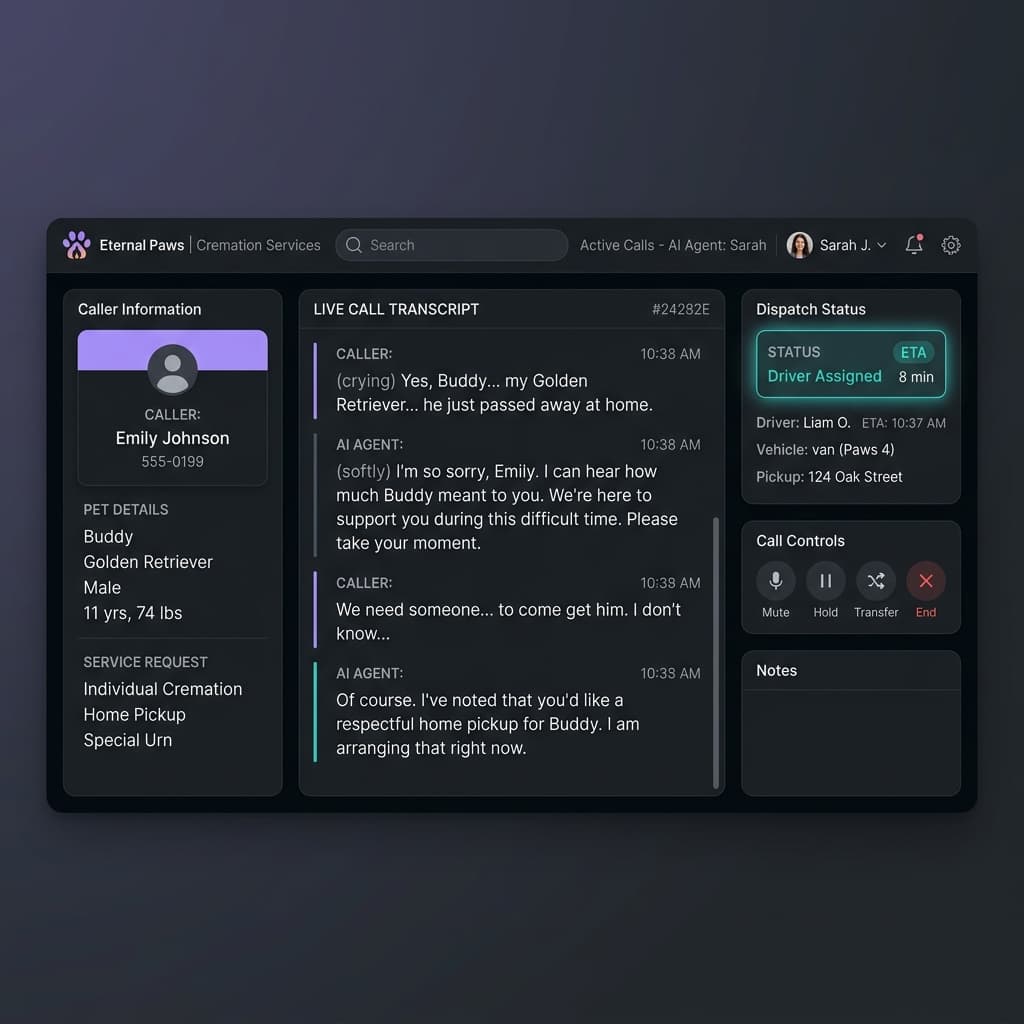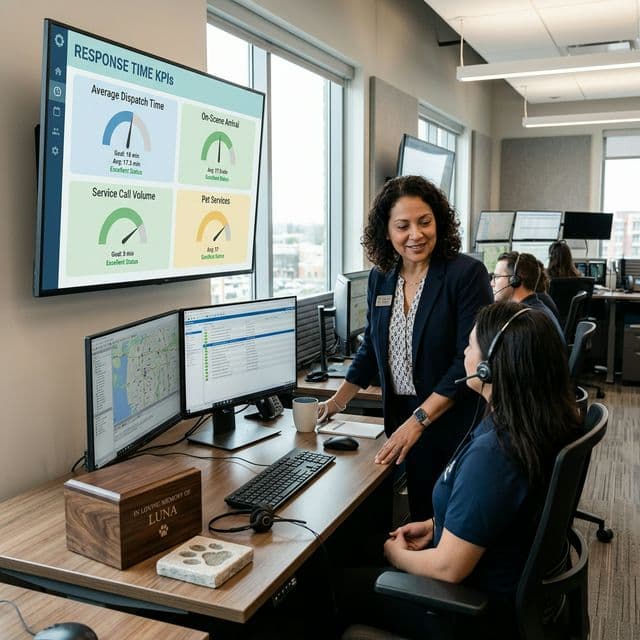
The five metrics that predict pet aftercare business success are: call capture rate (target 95%+), average response time (target under 90 minutes), client satisfaction score (target 4.8+/5), referral rate (target 3+ per client), and route efficiency (target 6+ pickups per driving shift).
Why Tracking KPIs Matters
Pet aftercare operators who track and review KPIs weekly grow revenue 2.3x faster than operators who rely on gut feeling. The data shows exactly where to invest time and money for the highest return.
You cannot improve what you do not measure. In a business where emotional quality drives referrals and referrals drive growth, understanding your numbers is the difference between a struggling solo operation and a thriving multi-vehicle fleet.
This guide defines the five essential KPIs, explains how to measure each one, and provides benchmarks to evaluate your performance.
KPI 1: Call Capture Rate
Definition: The percentage of inbound calls that are answered (by a human or AI agent) rather than going to voicemail or being abandoned.
How to measure: Most phone systems provide call logs showing answered vs. missed calls. If you use an AI voice agent, the dashboard reports this automatically.
Why it matters: Every missed call is a lost booking. At $150 average ticket value, a 50% call capture rate means you are leaving roughly half your potential revenue on the table.
How to improve: Deploy an AI call agent that answers every call within 3 seconds, 24/7. This single change typically moves call capture from under 50% to over 95% within the first week.
KPI 2: Average Response Time
Definition: The time elapsed from when a pickup is booked to when the specialist arrives on site.
| Performance Level | Response Time |
|---|---|
| Excellent | Under 60 minutes |
| Good | 60 - 90 minutes |
| Acceptable | 90 - 120 minutes |
| Poor | Over 120 minutes |
How to measure: Track the timestamp when the booking is created and the timestamp when the specialist marks "arrived" in the dispatch system. Calculate the difference.
Why it matters: Families in distress perceive time differently. What feels like "a few minutes" to you feels like hours to them. Consistently fast response builds the trust that generates referrals.
How to improve: Route optimization (see our scheduling guide), strategic vehicle positioning during peak hours, and maintaining a backup specialist on standby.
KPI 3: Client Satisfaction Score
Definition: Average rating from post-service surveys, measured on a 1 to 5 scale.
How to measure: Send a brief survey via text message 48 hours after the pickup. Ask one question: "How would you rate your experience with PetPickupNow? (1-5 stars)" followed by an optional comment field.
Response rate tip: Text surveys get 3x higher response rates than email surveys. Keep it to one question. Multi-question surveys in this context feel tone-deaf because the family is still grieving.
Benchmark: Target 4.8 or above. Anything below 4.5 indicates a systemic problem with either communication, handling, or follow-up. Analyze the comments from low-rated surveys to identify patterns.
Why it matters: A 4.8+ average is what you display on Google, Yelp, and your website. It is proof that you deliver on your promise.
KPI 4: Referral Rate
Definition: Average number of new clients referred by each existing client over 12 months.
How to measure: Ask every new client "How did you hear about us?" Track the source in your CRM. For referral sources, note the referring client's name so you can attribute referrals accurately.
Why it matters: Referrals are free customer acquisition. Every dollar spent improving client experience pays dividends through organic referral growth. The difference between 1.4 and 3.2 referrals per client is the difference between flat growth and exponential growth.
How to improve: Implement the follow-up framework: Day 1 confirmation text, Day 3-7 ashes-ready call, Day 30 condolence card. This sequence is the single biggest driver of referral rates.
KPI 5: Route Efficiency
Definition: Number of completed pickups per driving shift (typically 8 hours).
| Performance Level | Pickups Per Shift |
|---|---|
| Low Volume / Startup | 2 - 3 |
| Established | 4 - 6 |
| Optimized | 7 - 9 |
| High-Density Metro | 10+ |
How to measure: Count completed pickups per day, divided by total driving hours. Exclude time spent at crematories and base operations.
Why it matters: Route efficiency directly impacts your operating margin. Each additional pickup per shift adds $100 to $150 in revenue without increasing fixed costs.
How to improve: Zone-based scheduling, strategic crematory relationships (choose facilities along your route, not across town), and real-time dispatch that assigns new pickups to specialists who are already in the area.
Setting Up Your KPI Dashboard
Start simple. A Google Sheet with 5 columns and daily entries is enough. As you grow, your dispatch software will automate most of this tracking. The important thing is to start measuring today and review the data consistently every week.