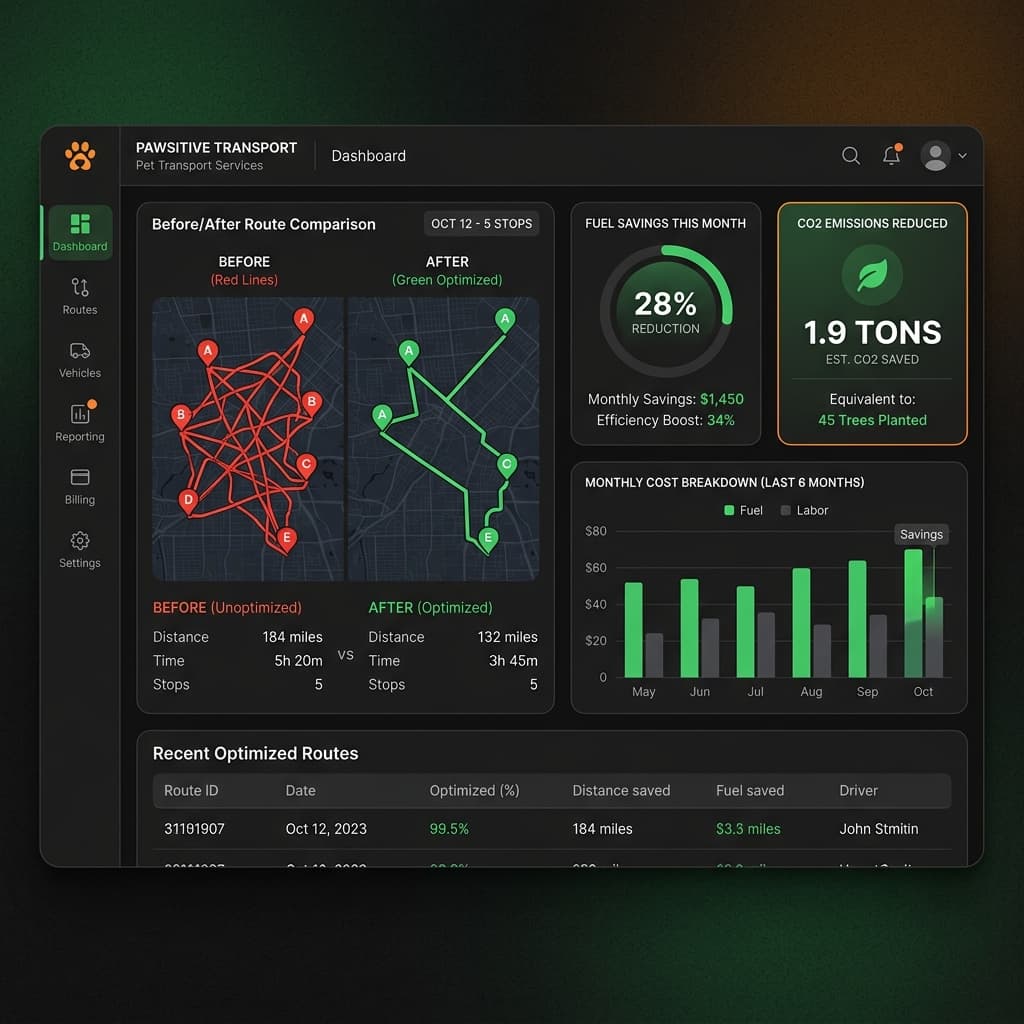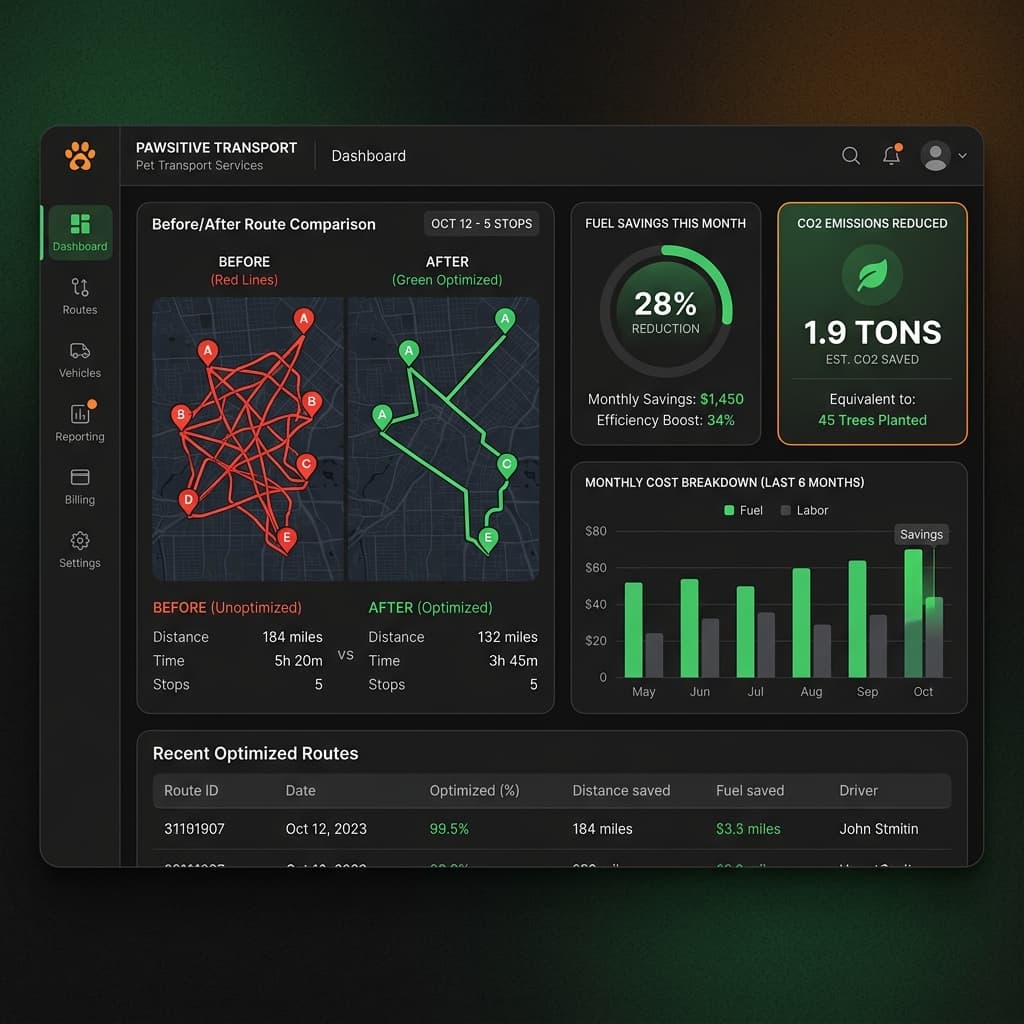
Route optimization can reduce daily drive time by 30% and increase pickup capacity by 2 to 3 additional jobs per day. The key is clustering pickups by geography and time window, not processing them first-come-first-served.
Why Route Planning Matters in Pet Aftercare
The average pet pickup specialist drives 85 miles per day across 4 to 6 pickups. Without route optimization, that number jumps to 130 miles for the same volume, wasting 2+ hours of productive time in transit.
Pet pickup requests arrive unpredictably throughout the day and night. The instinct is to process each request immediately in the order it was received. But this approach creates inefficient zigzag routes across your service area, burning fuel and time that could be spent on additional pickups.
Smart route planning does not mean making families wait longer. It means grouping nearby pickups into efficient sequences so you spend more time serving clients and less time driving between them.
The Clustering Strategy
Divide your service area into 4 to 6 geographic zones. When multiple pickup requests come in, group them by zone and build your route accordingly.
Implementation steps:
The zone system works because pet pickups, unlike emergency medical transport, can tolerate a 2 to 4 hour response window without any quality degradation. Families typically prefer a specific time window over an immediate but vague response.
Managing Time Windows
When a family calls, offer a 2-hour arrival window rather than an exact time. This gives you the flexibility to route efficiently while still setting clear expectations.
| Window | Best For |
|---|---|
| "Within 2 hours" | Urgent pickups (pet just passed, family distressed) |
| "Morning (8 AM - 12 PM)" | Non-urgent, family has pet in cool room |
| "Afternoon (12 PM - 5 PM)" | Scheduled pickups from vet clinics |
| "Evening (5 PM - 9 PM)" | Families who work during the day |
Route tip: Start your day at the furthest point from your home base and work inward. This prevents the common mistake of driving past nearby pickups to reach a distant one first, then backtracking later.
Technology for Route Optimization
Manual route planning works at low volumes (under 4 pickups per day). Beyond that, technology is essential.
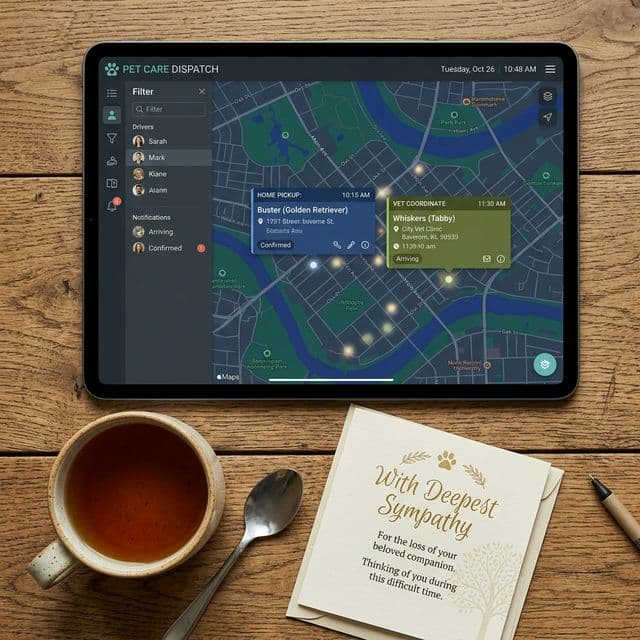
The most efficient operators use AI dispatch that automatically assigns each new pickup to the optimal position in the day's route. The specialist receives an updated route on their phone, and the family receives an accurate ETA based on real-time traffic conditions. No manual coordination required.
Coordinating with Crematory Drop-Offs
Your route must include crematory drop-offs, not just pickups. Most operators drop off collected remains at the crematory once or twice per day, typically at the end of a route loop.
Plan your routes so the crematory is the last stop before returning to base. This avoids carrying remains longer than necessary and keeps the vehicle available for new pickups during peak hours.
If you work with multiple crematories (for example, one that specializes in large animals and another for small pets), factor crematory assignment into your zone planning. Route Zone A pickups to Crematory 1 and Zone B pickups to Crematory 2 to prevent cross-town deliveries.
Measuring Route Efficiency
Track these metrics weekly to confirm your routing strategy is working:
| Metric | Target | How to Measure |
|---|---|---|
| Miles per pickup | Under 15 | Total daily miles / total pickups completed |
| Drive time percentage | Under 40% | Hours driving / total shift hours |
| Fuel cost per pickup | Under $8 | Monthly fuel spend / monthly pickups |
| Pickups per shift | 5+ | Count completed pickups per 8-hour shift |
Review your route logs every Friday. Look for days where miles-per-pickup spiked above 20. Those are the days where a single out-of-zone request disrupted the entire route sequence. Identify whether those requests could have been batched differently or served by a partner operator in the distant zone.
Consistent route discipline across 90 days typically saves $300 to $500 per month in fuel costs alone, while adding 2 to 3 additional revenue-generating pickups per week.
Keep reading: