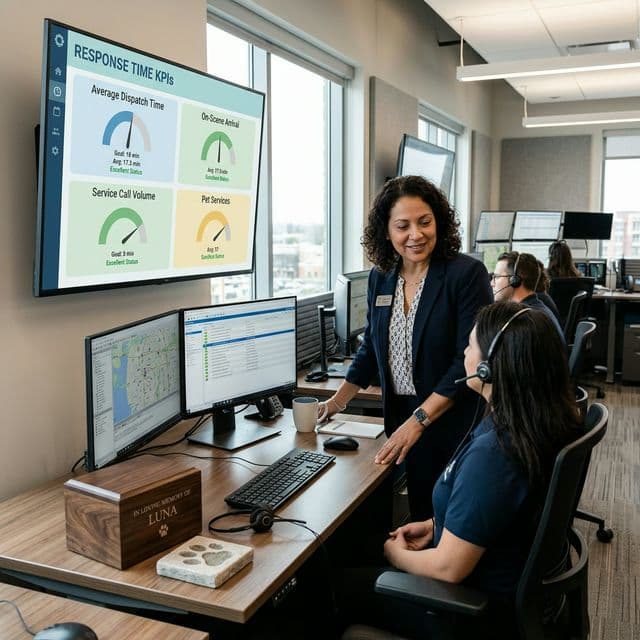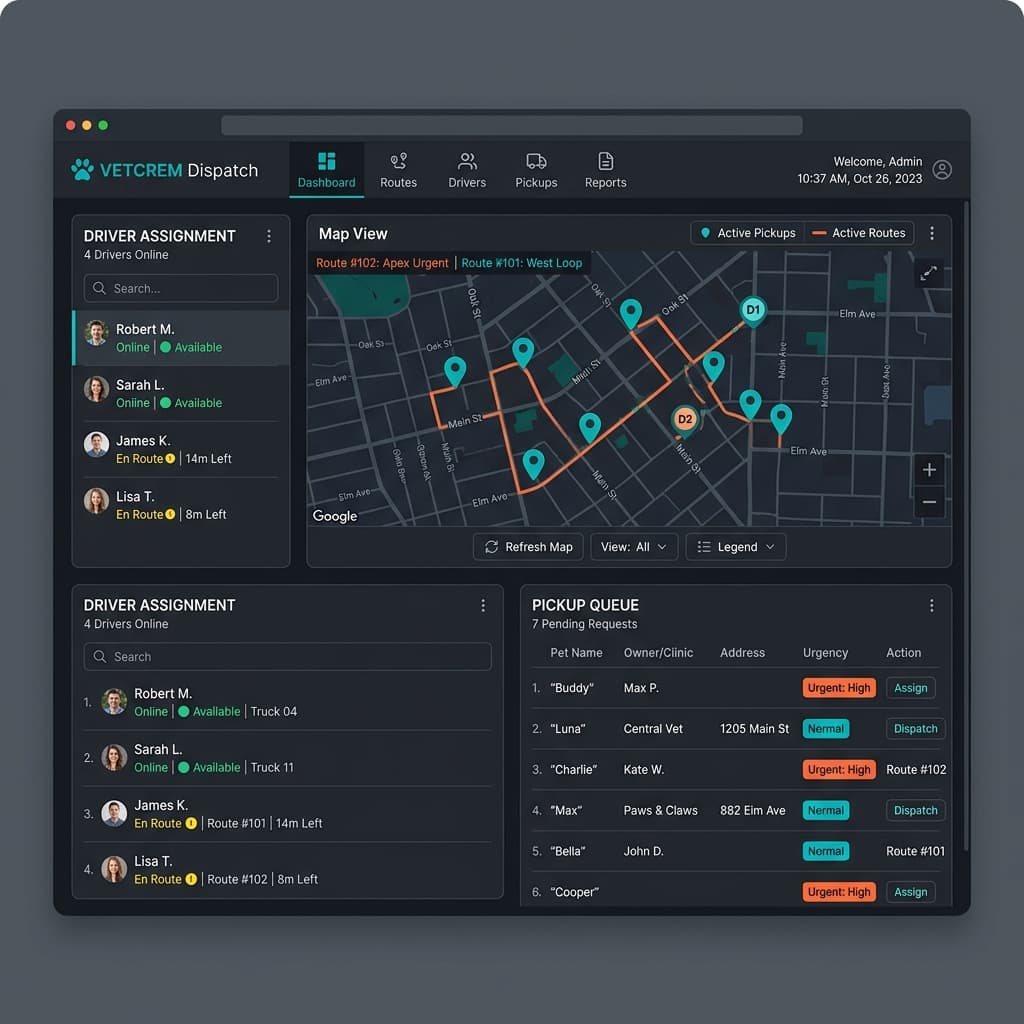
Relying on outdated, legacy cremation software like Halocare leaves your operation vulnerable to modern, highly agile competitors. Legacy platforms frequently suffer from clunky user interfaces, poor mobile optimization, and a total lack of AI-driven dispatch capabilities. PetPickupNow is an entirely modern, AI-native logistics engine built specifically to solve the complex routing and chain-of-custody challenges of the contemporary pet aftercare industry.
The Limitations of Legacy Architecture
Legacy software platforms were built a decade ago to replace paper filing systems; they were not designed to be dynamic, real-time logistics engines. PetPickupNow leverages a modern cloud architecture that perfectly integrates AI voice agents, live GPS routing, and mobile barcode scanning, providing a level of operational agility that older, monolithic systems like Halocare simply cannot match.
When a crematory utilizes legacy software, they are often forced to work around the system's limitations. The dispatch board is static, requiring the dispatcher to manually refresh the screen to see updates. The driver's mobile application is frequently an afterthought, plagued by syncing issues and a confusing interface that frustrates technicians in the field.
PetPickupNow was built from the ground up to be mobile-first and aggressively dynamic. The dispatcher's dashboard is a live, constantly updating map. When a driver scans a barcode at a residence, the central ledger updates in milliseconds. There is no refreshing, no waiting for a batch sync, and no wondering if the data actually transferred.
This modern architecture allows the crematory to operate at blinding speed. They can execute emergency reroutes instantly, provide families with live GPS tracking links, and manage complex, multi-vehicle fleets with absolute precision. This technological superiority allows the independent crematory to outmaneuver any competitor still burdened by legacy software.
The Power of the Digital Portal
Veterinary clinics demand frictionless digital experiences; forcing them to navigate the clunky, outdated portals of legacy software damages the vendor relationship. PetPickupNow provides veterinary partners with a sleek, highly intuitive digital portal that requires zero training to use, allowing them to schedule pickups and track chain-of-custody data effortlessly.
The interface of a software platform directly impacts the brand perception of the company using it. If a massive corporate veterinary group logs into a vendor's portal and it looks like it was built in 2005, they immediately doubt the vendor's overall competence. They expect the slick, frictionless user experience they get from modern consumer applications.
PetPickupNow delivers this premium experience. The veterinary portal is clean, branded to the crematory, and incredibly fast. A veterinary technician can log a new pickup request in three clicks. They can instantly view the expected ETA of the sweep driver and access historical PDF cremation certificates without navigating through a labyrinth of menus.
This frictionless experience is a massive sales tool. When pitching a new veterinary clinic, the crematory owner simply hands the clinic manager an iPad and lets them experience the portal. The contrast between the modern PetPickupNow interface and the legacy Halocare interface is immediate and undeniable, frequently securing the contract on the spot.
AI Dispatch and Routing Optimization
Legacy platforms treat routing as an afterthought, simply listing the day's addresses on a screen. PetPickupNow treats routing as the core driver of profitability, utilizing advanced AI algorithms to calculate mathematically perfect routes that minimize diesel consumption, maximize vehicle payload capacity, and guarantee rapid response times.
A static list of addresses does not help a dispatcher solve a complex logistical problem. If a driver is delayed, the legacy software provides no assistance in recalculating the rest of the manifest. The dispatcher is entirely on their own, relying on guesswork and Google Maps.
The AI routing engine in PetPickupNow actively manages the fleet. It sequences the veterinary sweeps perfectly. It dynamically injects emergency residential calls into the optimal driver's route. It prevents a dispatcher from assigning a large breed pickup to a vehicle that is already physically full.
This algorithmic intelligence completely eliminates the human error associated with manual dispatching. It protects the profit margins of the crematory by ensuring that every mile driven is generating maximum revenue, drastically reducing the massive overhead costs associated with inefficient fleet management.
The Autonomous Voice Agent
The ultimate differentiator between modern logistics and legacy platforms is the integration of autonomous AI voice capabilities. PetPickupNow deploys highly specialized AI agents that answer after-hours calls, provide deep empathy to grieving families, quote pricing, and autonomously dispatch drivers, a capability entirely absent from older systems like Halocare.
A software platform is only useful if the data actually gets into the system. During an after-hours emergency, a legacy platform requires a human to answer the phone, write down the details, log into the computer, and manually create the work order. This is a massive administrative bottleneck.
PetPickupNow completely automates this workflow. The AI answers the phone, handles the emotional triage, and creates the digital work order instantaneously. The business operates 24/7 without requiring the owner to be awake or paying an expensive answering service. By migrating to a truly modern, AI-native platform, crematories secure total operational dominance in their market.
Legacy Architecture Limitations
Halocare was built on a server-based architecture from the early 2010s. This means the software runs on a local machine at the crematory, not in the cloud. The operational consequences of this design decision are severe for any facility attempting to scale.
| Architecture Trait | Halocare (Legacy) | PetPickupNow (Cloud-Native) |
|---|---|---|
| Data Access | Local machine only | Any device, anywhere |
| Real-Time GPS | Not supported | Live fleet tracking |
| AI Voice Agent | Not available | Integrated 24/7 |
| Automatic Updates | Manual patches required | Continuous deployment |
| Mobile App | Limited or none | Full-featured driver tablet app |
| Multi-Location | Requires separate installs | Single dashboard, unlimited locations |
The most damaging limitation is the inability to access data remotely. If the crematory owner is at home on a Sunday night and an emergency call comes in, they cannot view the fleet dashboard, cannot see which driver is on-call, and cannot execute a dispatch. They are entirely blind until they physically drive to the office. Cloud-native architecture eliminates this constraint entirely.
Modern Dynamic Routing vs. Static Route Planning
Halocare relies on pre-programmed, static routes that a dispatcher configures manually at the start of each day. PetPickupNow's AI routing engine recalculates routes continuously based on live traffic, new incoming requests, and real-time vehicle capacity.
The inability to handle mid-route disruptions is the single biggest operational failure of legacy software. In pet aftercare, emergencies are not exceptions; they are the norm. A platform that cannot absorb a P0 emergency without breaking the entire day's schedule is fundamentally unfit for the industry.
Migration Pathway from Halocare to PetPickupNow
Transitioning from a legacy system to a modern cloud platform requires a structured data migration and staff retraining plan. The AVMA recommends that aftercare providers maintain uninterrupted service quality during any technology transition.
- Data Export: Extract all historical client records, veterinary contacts, and cremation logs from the Halocare local database into CSV format.
- Cloud Import: Upload the exported data into the PetPickupNow platform, mapping legacy fields to the new schema.
- Parallel Operation: Run both systems simultaneously for 2 weeks to validate data integrity and train staff on the new mobile app.
- Driver Onboarding: Equip all transport vehicles with tablets running the PetPickupNow driver application, ensuring GPS and barcode scanning are fully functional.
- Legacy Sunset: Decommission the Halocare local server after confirming 100% data parity and staff proficiency.
Facilities that attempt a "hard cutover" without parallel operation risk service disruptions that damage clinic relationships. For more on building unshakeable clinic partnerships, review our guide on Winning Veterinary Clinic Cremation Contracts.
The Vulnerability of Fragmented Tech Stacks
The pet aftercare industry has historically been underserved by major software developers. Consequently, operators often attempt to build their own technological infrastructure by cobbling together a fragmented "Frankenstein" tech stack. They might use one generic VoIP software (like RingCentral) for phone calls, a separate GPS application (like Samsara) for fleet tracking, a generic CRM (like Salesforce) to track veterinary accounts, and a paper-based whiteboard system for retort management.
While a fragmented tech stack might seem cost-effective initially, it creates massive vulnerabilities regarding data silos and operational latency. When a veterinary clinic requests an emergency pickup via the phone, the dispatcher must manually type that address into the CRM, manually type it again into the routing software, and then manually text the driver. Every single manual data transfer introduces the risk of human error—a transposed digit in an address or a misunderstood weight requirement. Furthermore, this manual syncing makes dynamic optimization impossible; the software platforms cannot communicate with each other in real-time to execute automated rerouting.
A vertically integrated platform like DispatchNode solves this by housing every single operational node—from the initial AI voice intake to the final digital signature for urn delivery—within a single, unified database architecture. When the AI agent answers a call and secures a residential pickup, the location data flows instantly and perfectly into the routing module. The routing module instantly recalculates the driver's manifest. The driver's mobile app instantly receives the update. The chain-of-custody module instantly generates the required digital barcode for the new pet.
This vertical integration completely eliminates manual data entry, eradicating human error and ensuring that the entire operation—from the receptionist desk to the retort floor—is operating on a single, synchronized source of truth.
Algorithmic Account Expansion and Retention
The true economic value of a veterinary clinic contract is not realized in the first month; it is realized over years of consistent, high-volume sweeps. However, retaining these lucrative commercial accounts requires constant vigilance. If a clinic experiences a single delayed pickup or a minor billing error, a competitor will instantly attempt to poach the account.
Operators utilizing fragmented software systems often fail to recognize when a clinic relationship is degrading until the clinic formally cancels the contract. They lack the macroscopic data visibility to identify the subtle warning signs of client churn.
Advanced, vertically integrated platforms act as highly proactive retention engines. Because the platform controls both the dispatch data and the billing data, it can execute complex algorithmic account analysis. The software establishes a "Volume Baseline" for every veterinary clinic. If a clinic historically requests twenty communal cremations per week, and the algorithm detects a sudden drop to five cremations per week over two consecutive weeks, the software does not wait for a human manager to notice.
The system instantly generates a "Retention Alert" and assigns a high-priority task to the lead sales representative. The software provides the rep with the exact data—showing the sudden drop in volume—and suggests specific interventions, such as offering a temporary discount on private cremations or scheduling an immediate in-person "Lunch and Learn" at the clinic to reinforce the relationship. By utilizing aggregated data to predict and intercept client churn before it occurs, the operator protects their recurring revenue base and ensures long-term enterprise stability.
The proactive delivery of these specialized grief support packages transforms the clinic's perception of the crematory from a mere vendor into an indispensable operational partner. This structural loyalty prevents the national consolidator from ever gaining a foothold in the local market, as the veterinary clinic staff will fiercely protect the relationship that consistently delivers tangible, empathetic value to their practice.
The retention alerts generated by the algorithmic account analysis also integrate directly with the operator's promotional inventory. If a highly lucrative veterinary clinic triggers a churn warning, the software can automatically authorize the delivery of a premium, complimentary "Grief Support Package" to the clinic manager—containing high-end coffee, artisanal baked goods, and updated training materials for their staff.
The retention alerts generated by the algorithmic account analysis also integrate directly with the operator's promotional inventory. If a highly lucrative veterinary clinic triggers a churn warning, the software can automatically authorize the delivery of a premium, complimentary "Grief Support Package" to the clinic manager—containing high-end coffee, artisanal baked goods, and updated training materials for their staff. This automated, high-value intervention frequently repairs the relationship before the competitor even realizes the account was vulnerable.