Safe pet transport requires temperature control within the first 2 hours, proper containment using leak-proof carriers, and documentation that satisfies both health codes and client expectations. This guide covers every step.
Why Transport Protocols Exist
Improper handling of animal remains accounts for over 1,200 health code citations per year across U.S. municipalities. Professional transport protocols prevent these violations while maintaining the dignity families expect.
When a pet passes at home or at a veterinary clinic, the clock starts immediately. Biological decomposition begins within 2 hours at room temperature. Without proper temperature management and containment, transport becomes both a health risk and an emotional burden for the family.
This guide outlines the exact protocols used by professional pet pickup services to ensure safe, compliant, and respectful transport from point of death to aftercare facility.
The First 30 Minutes: Initial Response
The first half hour sets the tone for the entire experience. Professional responders follow a consistent sequence:
Families often ask how long they can wait before calling. The honest answer: the sooner, the better. Within 2 hours at room temperature, or up to 24 hours if the pet is kept in a cool room (below 50F), remains can be transported without complication. Beyond that window, additional containment measures become necessary.
Containment and Wrapping Standards
Every transport must use a leak-proof containment system. The industry standard involves three layers:
For pets over 100 lbs, a transport stretcher with side handles is mandatory. Two responders should be dispatched for any pickup involving a large breed dog, horse, or livestock animal.
Common mistake: Using trash bags instead of medical-grade liners. This creates two problems: trash bags tear during loading, and families who see them feel their pet is being treated as waste. Always use professional-grade containment supplies.
Vehicle Standards for Pet Transport
Transport vehicles must meet specific criteria to maintain both safety and professionalism:
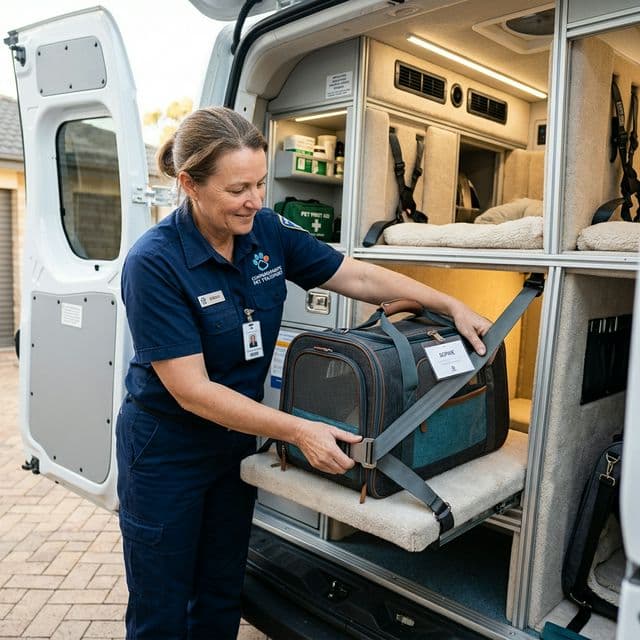
The vehicle cargo area should be separate from the passenger cabin, easy to sanitize (stainless steel or sealed surfaces), and equipped with tie-down points to prevent shifting during transit. A dedicated cooling unit is strongly preferred over vehicle air conditioning because it maintains consistent temperature regardless of driving conditions.
Vehicles should carry the following supplies at all times: 3 sizes of containment bags, 2 blankets, disposable gloves, sanitizing spray, a transport stretcher, and a clipboard with blank chain-of-custody forms.
Chain-of-Custody Documentation
Documentation protects both the service provider and the family. Every pickup should generate a record that includes:
| Field | Purpose |
|---|---|
| Pet name, species, breed | Identification throughout aftercare |
| Owner name and contact | Communication for aftercare delivery |
| Pickup location and time | Legal record of transfer |
| Specialist name and ID | Accountability |
| Destination facility | Routing confirmation |
| Owner signature | Consent for transport and chosen aftercare |
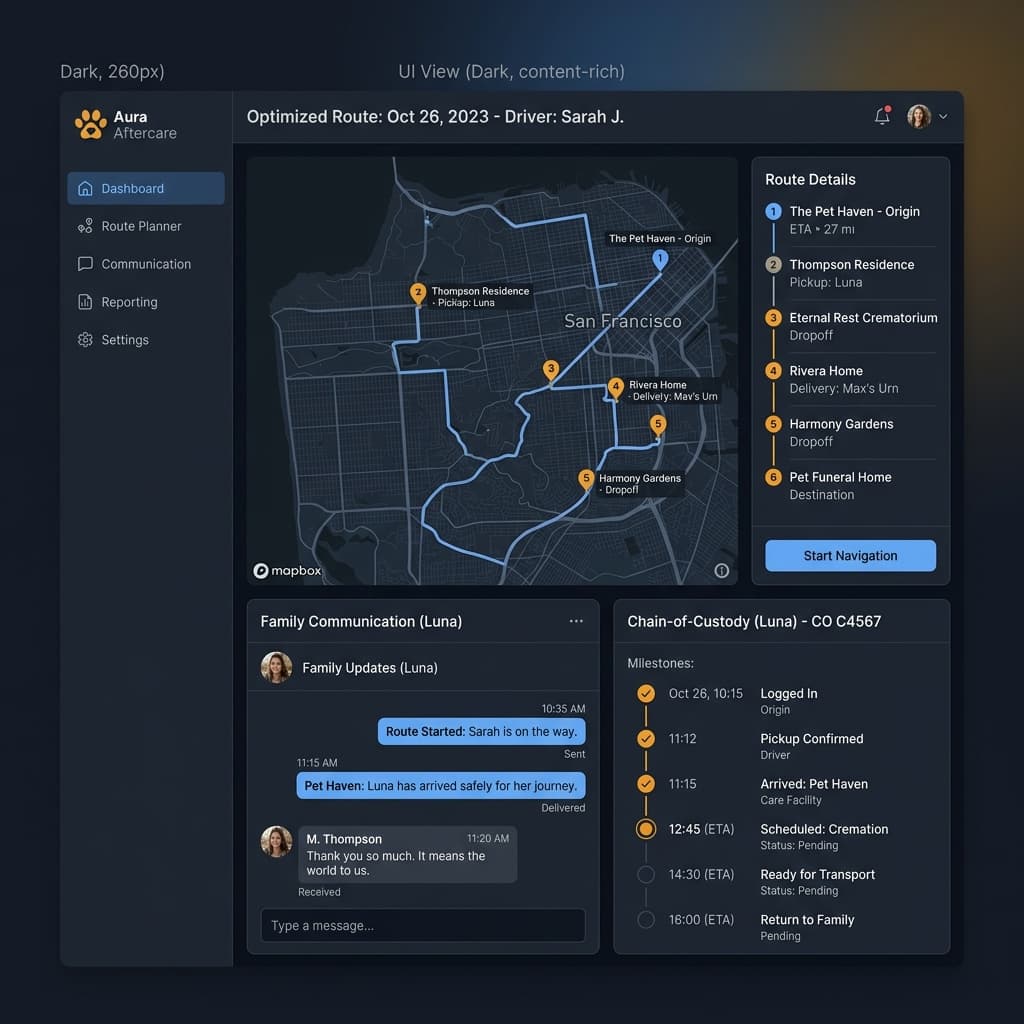
This form travels with the pet from pickup through cremation or burial. It ensures the correct pet is matched to the correct owner at every handoff point. Without it, mix-ups are possible, especially at high-volume crematories processing dozens of animals per day.
Handling Special Situations
Not every pickup follows the standard script. Responders must be prepared for:
Roadside or outdoor recoveries: These may involve exposure to weather, traffic hazards, or wildlife. Bring additional PPE (high-visibility vest, heavy gloves) and a rigid recovery board for uneven terrain.
Pets that passed from infectious disease: If the veterinarian has confirmed a communicable disease (parvovirus, leptospirosis), use full biohazard protocol: N95 mask, double gloving, sealed containment, and vehicle decontamination after delivery.
Multiple pet households: If a family has surviving pets in the home, coordinate with the owner to ensure other animals are secured in a separate room during the pickup. Surviving pets may react unpredictably to the process.
Regardless of the situation, the protocol remains: communicate clearly with the family, contain properly, document everything, and deliver to the aftercare facility within the 4-hour transport window.
Keep reading: