Where Your Transport Budget Actually Goes
You think your biggest expense is the cremation equipment. It is not. For most pet aftercare operators, the single largest controllable cost is transport — fuel, driver wages, vehicle maintenance, and insurance.
A typical 2-truck pet pickup operation in a mid-size metro area spends $4,800 per month on transport costs alone. Break that down and the waste becomes visible:
- Dead miles: 38% of miles driven are empty — driving to a pickup with no cargo, or returning to base between jobs. These miles burn fuel and driver time but generate zero revenue.
- Suboptimal sequencing: Drivers complete pickups in the order they were received, not the order that minimizes total driving distance. A pickup 3 miles south gets done before a pickup 1 mile east, even though reversing the sequence would save 14 miles.
- Coverage overlap: Two drivers cross paths in the same neighborhood on the same afternoon because nobody coordinated their territories.
- Idle time: Drivers wait at the facility for their next assignment because the dispatcher has not yet received or processed the incoming request.
Every dollar spent on dead miles is a dollar that could fund growth, improve driver pay, or reduce prices to win more veterinary clinic contracts.
Intelligent route optimization software attacks all four waste categories simultaneously, typically reducing total transport costs by 25-35% within 90 days of deployment.
How Route Optimization Works in Pet Aftercare
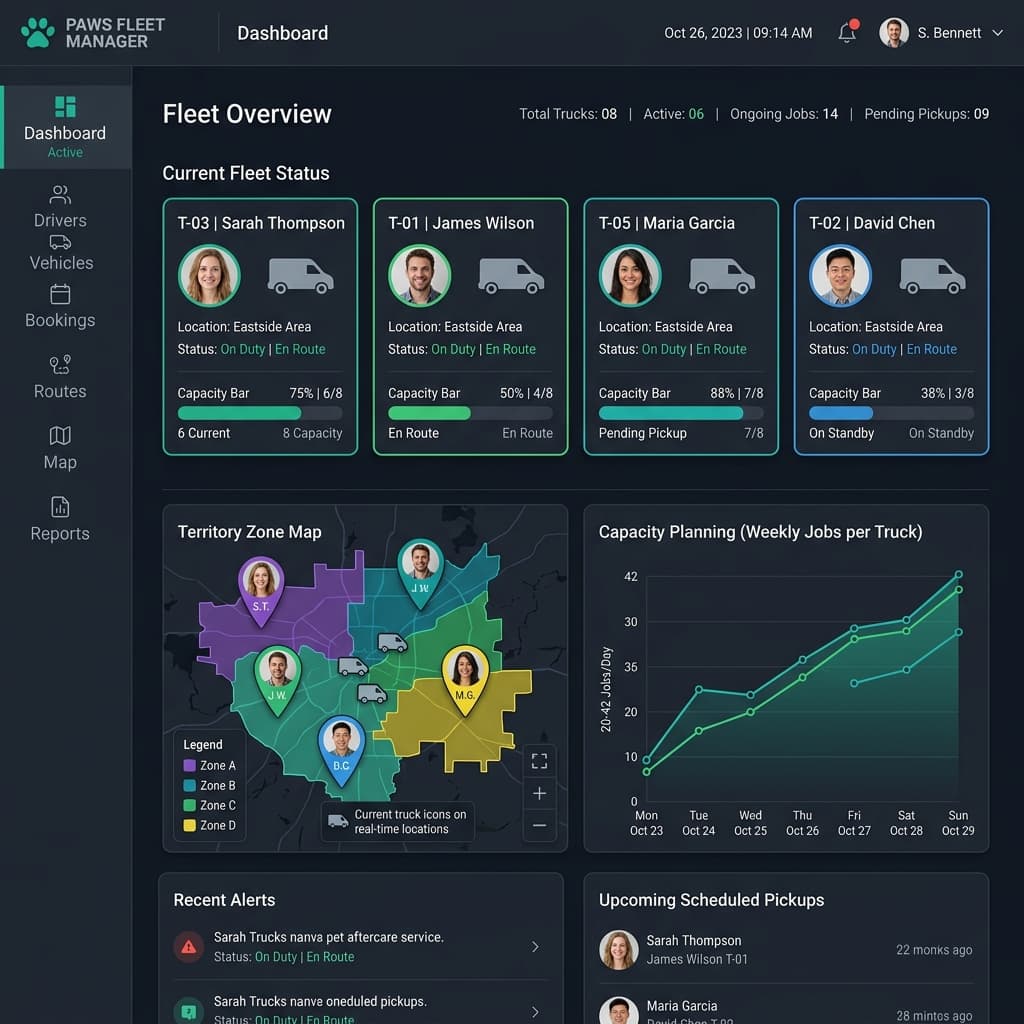
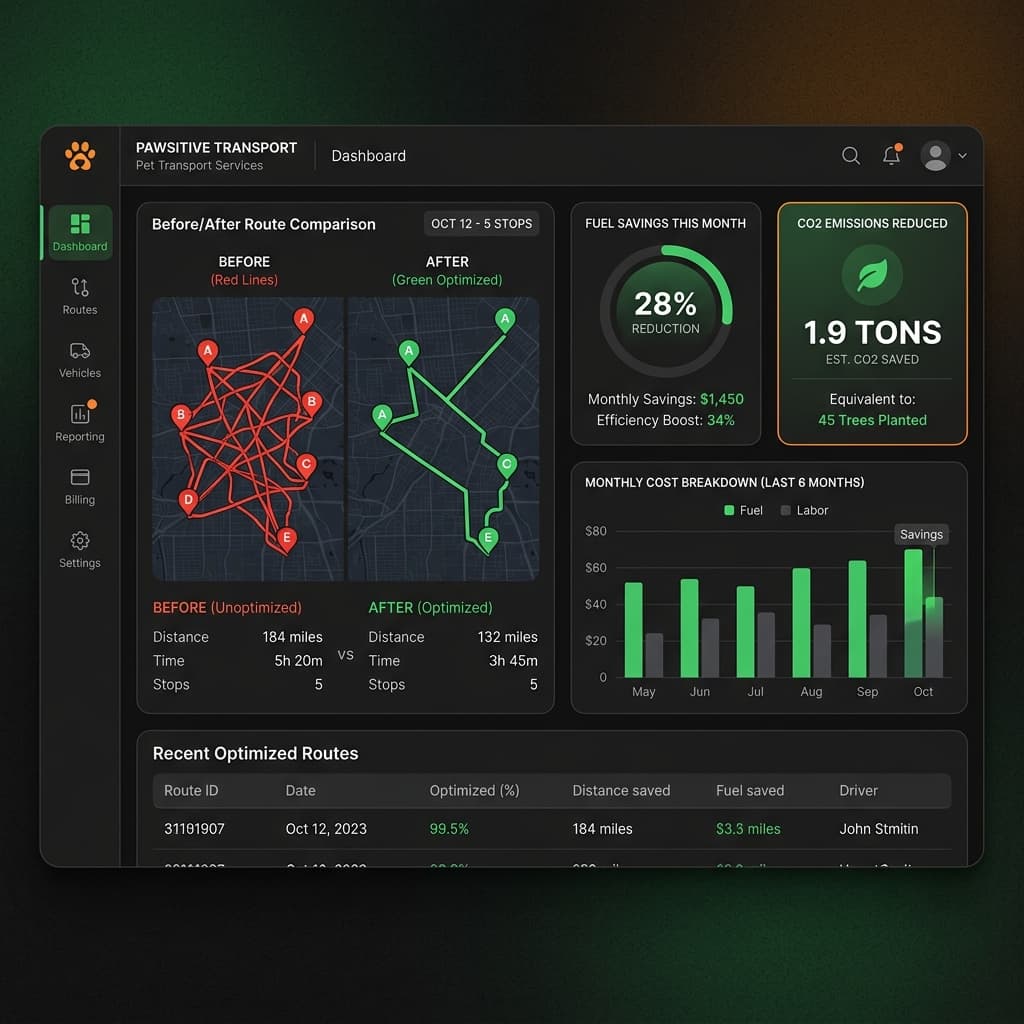
AI-powered route optimization for pet aftercare transport analyzes pending pickup locations, driver positions, vehicle capacities, and time windows to calculate the most efficient multi-stop route for each driver. It dynamically re-optimizes routes in real time as new pickups are requested, reducing dead miles by 35%, fuel costs by 28%, and average drive time between stops by 42% compared to manual dispatch sequencing.
The optimization engine considers factors that human dispatchers cannot process simultaneously:
Geographic Clustering
The system groups pickups into geographic clusters. Instead of sending a driver on three separate round trips, it sequences three pickups into a single loop. A driver who would have driven 47 miles on three individual trips drives 19 miles on one optimized route.
Time Window Optimization
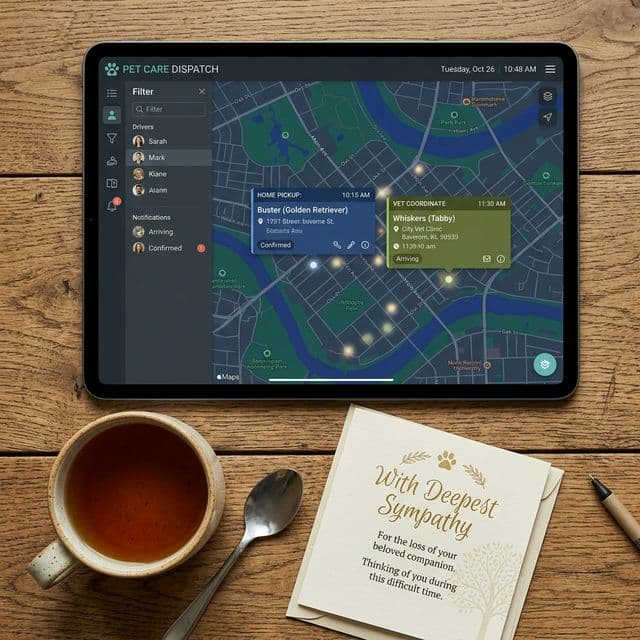
Not all pickups are urgent. Scheduled pickups from veterinary clinics often have a 2-4 hour window. Emergency home pickups need immediate response. The optimizer assigns immediate pickups to the nearest driver and batches scheduled pickups into efficient afternoon routes.
Dynamic Re-Routing
When a new emergency pickup enters the system mid-route, the optimizer does not simply add it to the end of the queue. It recalculates the entire route in real time, potentially re-sequencing existing stops to accommodate the emergency with minimal total distance increase.
Return-to-Base Elimination
Traditional dispatch brings drivers back to the facility between jobs. Optimized routing keeps drivers in the field, hopping from pickup to pickup, and only returning to the facility when their vehicle is at capacity. This alone eliminates 20-30% of dead miles.
Real Fuel Savings: A Case Study
Consider a 3-truck pet aftercare operation in the Dallas-Fort Worth metro area processing 18 pickups per day across a 40-mile service radius.
Before route optimization:
| Metric | Value |
|---|---|
| Total daily miles driven (all trucks) | 312 miles |
| Dead miles (empty driving) | 119 miles (38%) |
| Daily fuel cost ($3.40/gal, 15 MPG vans) | $70.70 |
| Monthly fuel cost | $2,121 |
| Driver labor hours on road | 24 hours/day |
After route optimization:
| Metric | Value |
|---|---|
| Total daily miles driven (all trucks) | 198 miles |
| Dead miles (empty driving) | 31 miles (16%) |
| Daily fuel cost | $44.80 |
| Monthly fuel cost | $1,344 |
| Driver labor hours on road | 16.5 hours/day |
Monthly savings: $777 in fuel + $2,100 in driver labor (7.5 hours/day × $14/hr × 20 days) = $2,877/month.
That is $34,524 per year in recovered capital from a software subscription that costs $199/month. The return on investment is 14.4x.
The Environmental Argument
Route optimization is not just a financial decision. For operators who market their services as compassionate and ethical, reducing emissions aligns with brand values.
The DFW operation above reduces annual miles driven from 81,120 to 51,480 — a reduction of 29,640 miles per year. At 15 MPG, that eliminates 1,976 gallons of fuel burned and approximately 17.4 metric tons of CO2 emissions annually.
This is a genuine differentiator in proposals to veterinary clinics and municipal contracts. "Our fleet drives 37% fewer miles than the industry average through AI-optimized routing" is a talking point that wins environmentally conscious clients.
For operators pursuing B Corp certification or municipal partnerships with sustainability requirements, route optimization data provides auditable proof of emissions reduction.
Keep reading: